
Mimetic is developing printable silicone for research devices without the mold
Mimetic is developing silicone resins for researchers who need custom devices and models, with a mold-free approach designed for existing 3D printers. The Pittsburgh company is also exploring custom materials and pilot work while its microfluidic prototyping product remains listed as coming soon. For a research team changing a design between experiments, avoiding a separate mold could remove a step from each iteration.
A material for custom research tools
Mimetic's 2026 American College of Surgeons conference abstract describes the problem in another setting: silicone can reproduce the feel of soft tissue in training models, but designing and making the mold can take substantial time. The company's proposed alternative is to print the silicone model itself using materials designed for off-the-shelf printers.
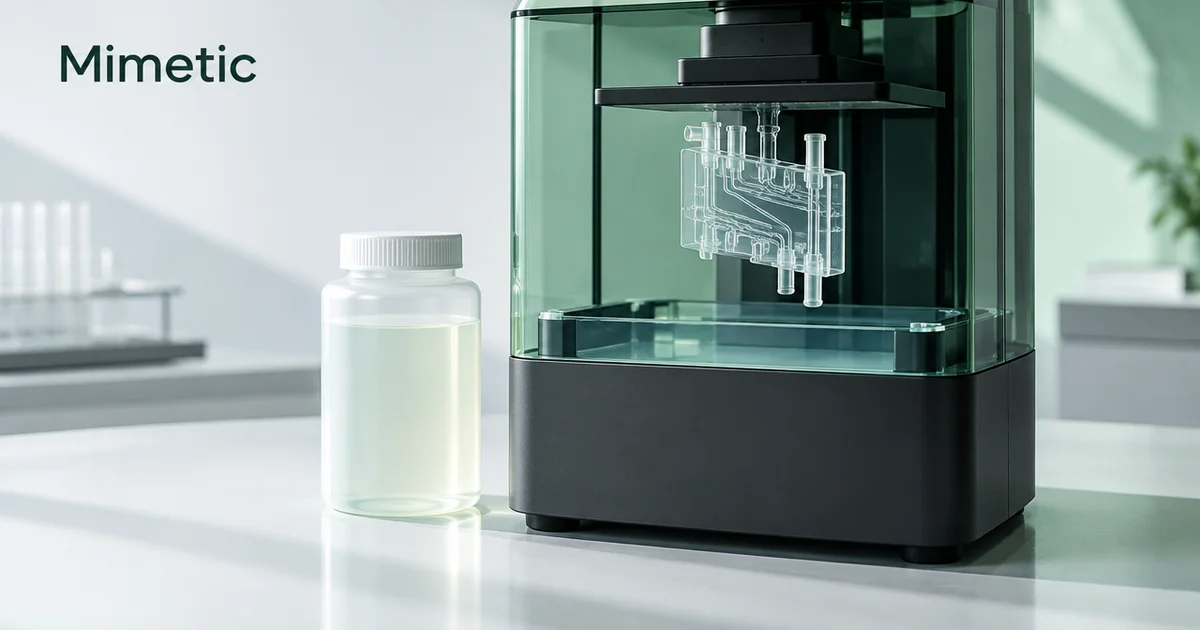
The same idea applies to microfluidics, the handling of small quantities of fluid through tiny channels. Mimetic says its intended research devices would be transparent and made through an automated process rather than manual casting and alignment. The company lists its microfluidic prototyping offer as coming soon and has a waitlist.
From a fine channel to a research model
In the 2026 abstract, Mimetic's Kevin Dai reported printing silicone tunnels as small as 0.3 millimeters to simulate blood vessels. The abstract presents anatomical models as a potential application and seeks collaborators to develop and test them. A small printed tunnel is a useful indication of the geometry the team is pursuing; it is not a demonstrated surgical-training or patient outcome.