
Fermi Energy develops cathode materials for battery makers facing costly ingredients
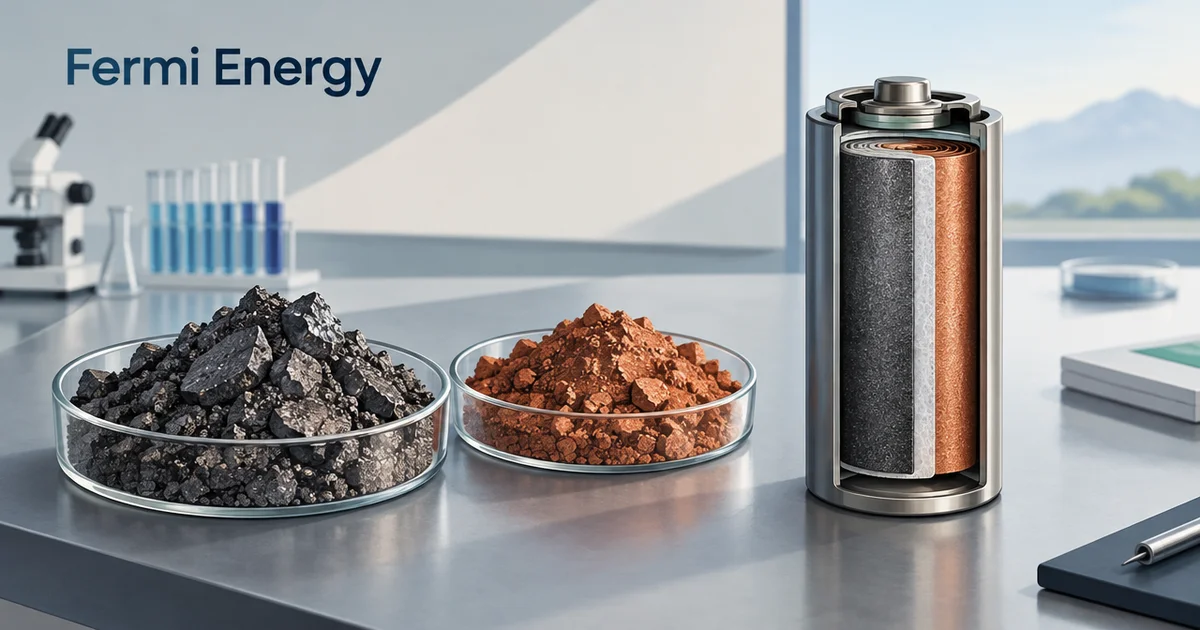
Fermi Energy is pursuing two routes into the battery supply chain. One cathode material is intended to fit familiar battery chemistries; another uses abundant metals in an effort to lower material cost. Cathode active material is an ingredient in a battery’s positive electrode and influences its cost and performance. Fermi’s intended buyers are battery manufacturers, rather than the drivers who use their finished products.
Two ways into the battery
Fermi describes its first-generation material as a drop-in option for nickel-manganese-cobalt and nickel-cobalt-aluminum batteries. It says a proprietary low-temperature process is used to make it.
The second-generation material uses manganese and iron, which the company says are abundant, and is designed to reduce cathode cost. Fermi also describes fast charging and operation across a wide temperature range as intended characteristics.
The distinction matters commercially. A material that fits an existing chemistry could give manufacturers a way to consider a new supplier without changing that chemistry. A different formulation, meanwhile, addresses the choice of ingredients themselves. Neither route establishes that a battery maker has adopted the material.
A concentrated supply chain
Fermi presents US-made cathode materials as an alternative in a market reliant on imports. The International Energy Agency estimates that China produced about 85% of cathode active material used in electric-car batteries worldwide in 2025.