
Editpep develops a nonviral way to deliver CRISPR for brain therapies
Editpep is developing a way to carry CRISPR gene-editing machinery into cells without using a virus, with an initial focus on brain therapies. Its approach addresses a basic problem for drug developers: an editor must reach the right cells before it can alter their DNA.
Getting the editor into cells
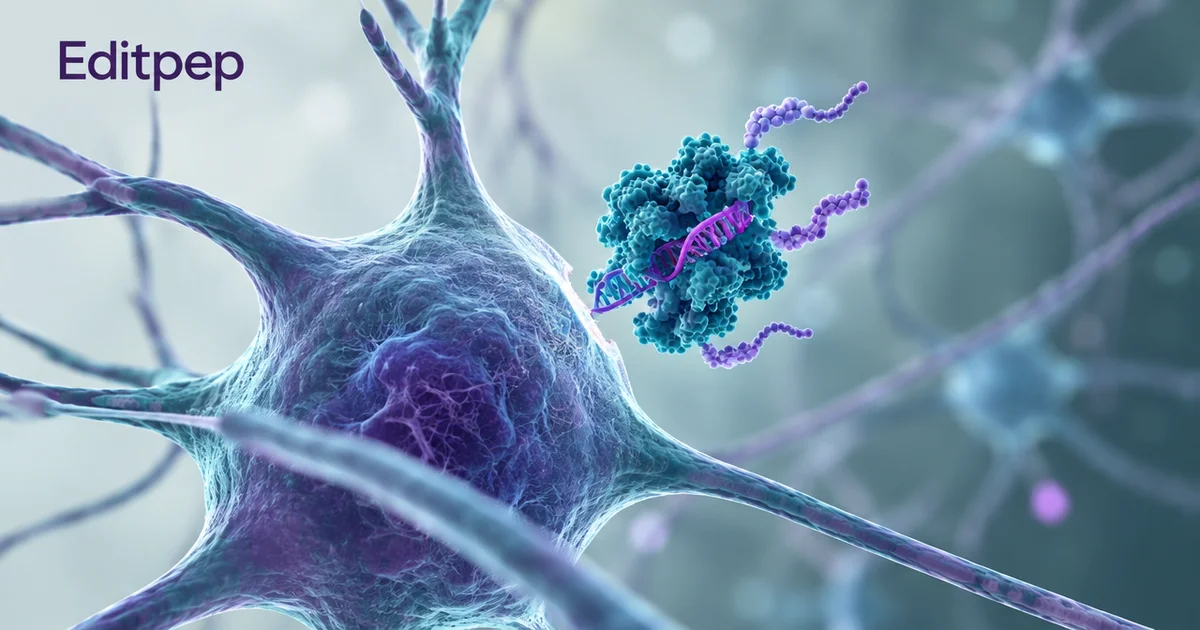
The company's PERC platform uses engineered peptides, or short chains of amino acids, with an assembled editing protein and guide RNA. The guide directs the editing machinery toward a genetic target; the peptides are intended to help the complex enter cells.
Editpep argues that existing viral and lipid-based delivery approaches face limitations in the brain. Its nonviral system is designed as an alternative, not an established clinical treatment.
From academic research to therapy development
The research behind PERC began in academic laboratories associated with UC Berkeley and the Innovative Genomics Institute. Editpep lists a 2023 paper by Dana Foss and colleagues on peptide-mediated delivery of CRISPR enzymes for editing primary human lymphocytes among its selected publications.
Foss is Editpep's CEO and a co-founder; Ross Wilson is a founder and adviser. In September 2025, Bakar Bio Labs reported that the team was assembling CRISPR components and testing them on tissue cultures while developing its therapies.